Fuller Quality Checks: Preventive Inspection vs. Breakdown Repair — Why the First Check Is Called Breakfast
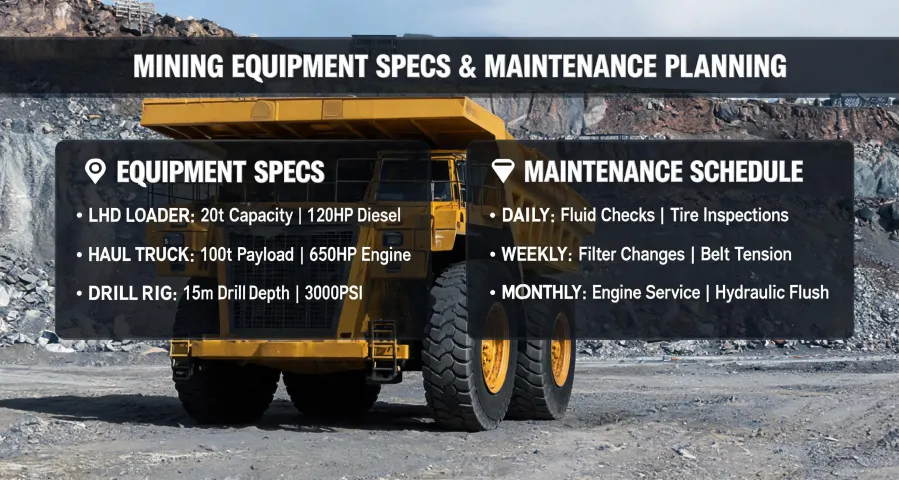
If your search was "liz clayton fuller" or "lisa fuller now," you're probably looking for people, not crushers. I can't help with the people. But if you're here because you're wondering why equipment keeps failing right after the warranty ends—or why the first check of the day is called a breakfast check—this article is for you.
I'm a quality inspector at Fuller, an energy and mining equipment supplier. I review every deliverable before it reaches customers—roughly 200+ unique items a year. In 2024, I rejected 11% of first deliveries due to spec drift or missing paperwork. That number is not a complaint. It's the reason I have a verification protocol.
This article is a head-to-head comparison of two maintenance philosophies: preventive inspection and breakdown repair. I'm not going to pretend both are equal. I'm going to show you where each one wins, where each one loses, and when you can rationally choose repair over prevention.
What This Comparison Is Built On
Preventive inspection means checking equipment on a schedule, before a failure. Breakdown repair means fixing equipment after it stops. The word "breakdown" already tells you the difference: you don't schedule it. You respond to it.
I'm comparing them on four dimensions: cost per event, downtime, spec drift, and vendor accountability. Those are the four places where I see maintenance decisions go right or wrong.
Dimension 1: Cost per Event
Preventive inspection wins on cost per event. A scheduled check is maybe half an hour of labor and a checklist. A repair is emergency shipping, overtime, replacement parts, and often a second failure because the root cause wasn't properly addressed.
I still kick myself for the conveyor alignment I decided to "wait on." It failed two weeks before the planned outage. The rework cost us $22,000 and delayed a customer shipment. The inspection that would have caught it would have taken 20 minutes. Five minutes of verification beats five days of correction—I know that sounds like a slogan, but the work order numbers back it up.
Dimension 2: Downtime
Preventive inspection wins on downtime. Planned downtime is visible on the calendar. Breakdown downtime is invisible until it stops production.
When I compared our Q1 and Q2 results side by side—same vendor, same equipment, different inspection discipline—I finally understood why the details matter. Q1 was mostly reactive. Q2 was preventive. Q2 had about half the unplanned downtime. The comparison isn't perfect science, but the pattern repeated across three sites.
Dimension 3: Spec Drift and the Breakfast Check
This is where prevention pulls ahead in a way that doesn't show up on a P&L until later.
Drift is the quiet thing. A gearbox runs three degrees hotter. A conveyor slows by 2%. A torque value is half a turn loose. Each one is small on its own. Together, they create the failure nobody can explain.
"You can't hear a spec starting to drift. You can only measure it."
Robert, our senior field technician, says that line. It's why every shift starts with the breakfast check. New hires always ask, "Why is it called breakfast?" Because it's the first thing you do before you let the equipment run. If you skip breakfast, you get hangry—and an angry machine is a breakdown.
Dimension 4: Vendor Accountability
This one surprises people. Preventive inspection is not just about the machine; it's about the paper trail.
Last year we received a batch of gearboxes where the bore diameter was visibly off—0.1 mm over our 0.02 mm tolerance. The vendor claimed it was "within industry standard." We rejected the batch, and they redid it at their cost. We could make that call because we had incoming inspection data. Without it, we would have installed them and then discovered the problem after installation, during the warranty headache.
Per FTC guidelines, claims have to be substantiated. I'm not a lawyer, but I apply the same rule to maintenance: no inspection record, no substantiation. If you didn't check it, you can't prove what "normal" was.
When Repair Is the Right Call
Now the part that might surprise you: repair is sometimes the right choice.
If the equipment is near the end of its life and you're planning to replace it, a full preventive program may be overkill. If you only run the equipment a few hours a month, a visual check may be enough. If you're decommissioning a plant, don't build a 12-point checklist; build a shutdown plan.
But call that what it is: a decision to accept risk. Don't call it "saving money." You're betting that the failure will be cheaper than the inspection. Sometimes you win. When you lose, you lose big.
The Bottom Line: Prevention Over Cure
Choose preventive inspection when downtime is expensive, deadlines matter, or more than one crew depends on the equipment. Choose repair when the asset is already scheduled for retirement and you can tolerate the variability. For everything else, the math says inspect first.
The fuller picture is this: a 20-minute check is not a delay. It's the price of being able to say "we know it's right" instead of "we think it's probably fine." And if you're still wondering why the first check is called breakfast—because it's the meal you can't skip.