Fuller, the Judge, or the Singer? Why Equipment Quality Matters More Than a Brand Name
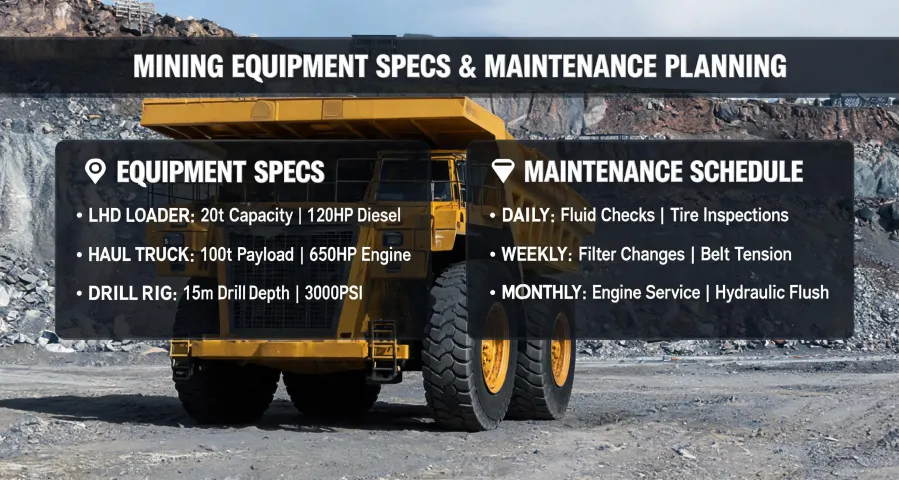
I'll admit it: when I order heavy equipment, I don't care about the brand's fame. I care if it holds up. That's why I've become a firm believer in the idea that quality is the only brand image that matters.
Let me explain. My company buys crushers and conveyors for mining operations. Our main supplier? A manufacturer called Fuller. In the industry, that name carries weight. But outside it? People ask if I'm talking about James Fuller, the judge from that courtroom show, or Jordan Fuller, the singer from The Voice. (I saw a search log once where "Fuller" led someone to a LEGO Millennium Falcon review. And somehow, "dutch van der" ended up in the same session. Why is it called a breakfast? I haven't figured that one out either—but that's a story for another day.)
The point is, a brand name can be a strange beast. It can attract attention for all the wrong reasons. But in my experience, the equipment's performance is what builds real trust. It took me a few costly lessons to learn that.
The Budget Trap That Cost Us Twice
In 2021, I saved $5,000 on a cheaper line of conveyor belts for one of our smaller sites. The pricing looked great on paper—about 20% below our usual supplier. But within three months, two belts snapped. We had to shut that line down for six days while we sourced replacements. Emergency shipping, overtime labor, and lost production added up to roughly $38,000. Net loss? $33,000.
That was the moment I stopped looking at upfront price tags and started calculating total cost of ownership. The cheapest quote isn't the same as the cheapest outcome.
Quality Shapes Perception
Since then, I've led purchasing for over 400 orders across three locations. And I've come to believe that every piece of equipment we install becomes a statement about our own company. When a Fuller crusher runs for 18 months without a major failure, our plant manager tells our clients, "You're in good hands." That reflection matters more than any logo.
It's not just about avoiding disasters. It's about the small signals: the durability of the steel, the fit of the fittings, the clarity of the maintenance manual. These details tell your customers whether you're the kind of company that sweats the details or the kind that cuts corners. In my five years of handling procurement, I've found that you can't fake quality in the field—sooner or later, it shows.
The Confusion Factor
Now, about the name confusion. I used to worry that people might associate our Fuller equipment with the entertainment world. But honestly, it's become an advantage in conversations. When someone says, "Fuller? Like the judge?" I get the chance to explain, "No, Fuller like the mining equipment that ran 24/7 for a year with zero downtime." That contrast sticks. It's more memorable than a standard elevator pitch.
Sure, some may argue that a well-known brand opens doors faster. But in B2B, relationships last because of reliability, not name recognition. If a brand can handle the wear and tear of a 24-hour operation, it earns respect. If it can't, all the advertising in the world won't save it.
So yes, quality shapes brand perception—not the other way around. A name might get attention, but it's the output that builds trust.
One More Thing
In the end, I've learned to laugh at the search results that confuse our brand with a singer or a spaceship. It doesn't matter if someone lands on our page while looking for LEGO Millennium Falcon parts. What matters is whether we can deliver equipment that doesn't embarrass us in front of a client.
And that, for me, is the real takeaway: the best brand strategy is a product that works. Everything else is just noise.