Fuller, Woolly Bear, and 'What Is an Divorce': Sorting a Keyword List That Fails QC
-
Scenario 1: The Keyword You Can Actually Own (Fuller)
-
Scenario 2: The Pop-Culture Orphan (Why Did Fuller House End)
-
Scenario 3: Dictionary Queries and Accidental Typos (Fuller Definition, First Congress, Woolly Bear, What Is an Divorce)
-
How to Tell Which Scenario You Are Dealing With: A 10-Minute QC Test
-
The Workflow That Fixed It (and Cut Our Waste by a Third)
-
Bottom Line
At 9:00 AM last Monday, our digital team dropped a keyword list on my desk. It read: 'fuller, why did fuller house end, fuller definition, first congress, woolly bear, what is an divorce.'
I nearly sent it back with a rejection stamp.
Here is the context: I am the quality manager at a company that builds heavy processing equipment. When a list like that lands in front of me, it is not just a content question - it is a spec question. You would not feed ungraded raw material into a crusher and hope for the best. You would sort it first. Content marketing is no different. But this is not a story about one bad list. It is about why 'write for your audience' falls apart when you have not figured out who your audience actually is.
There are three distinct scenarios hiding inside those six queries. Each needs a different answer. Let me walk you through them.
Scenario 1: The Keyword You Can Actually Own (Fuller)
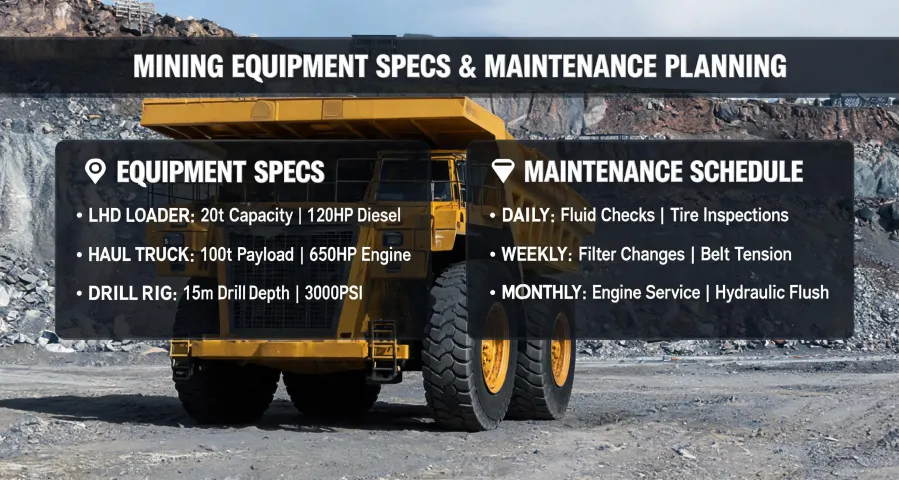
For an industrial company called Fuller, the keyword 'fuller' is gold. The dictionary definition - 'more full' or 'a person who fulls cloth' - is a decent starting point, but in our world, Fuller also refers to a legacy of mineral processing equipment: mills, crushers, and material handling systems. If someone searches just the word 'fuller,' they might be a student looking for a definition. Or they might be an engineer trying to track down a replacement part for a piece of machinery labeled 'Fuller.'
The quality move: publish one page that serves both. Start with a clean, concise definition, then transition into what 'fuller' means in an industrial context - with specifications, maintenance notes, and maybe a line drawing. That is the kind of content I will sign off on: specific, accurate, and genuinely useful to someone who might become a customer.
Everything I had read about SEO said to chase high-volume keywords. My own experience with 200+ reviewed deliverables says something else: a single technical page on 'fuller' brought us more qualified leads than a dozen listicles ever did. Put another way: relevance beats reach when you are doing B2B.
Scenario 2: The Pop-Culture Orphan (Why Did Fuller House End)
This is the trap. 'Why did Fuller House end?' is a perfectly valid search query - if you are an entertainment blog. For an industrial brand, it is a non-conforming part. The quick answer: Netflix ended the revival after five seasons in 2020, wrapping up the story so the cast could move on. The more honest answer is that the platform chose not to renew an expensive revival. It is a fun trivia fact. It just has nothing to do with our business.
I have seen the vanity trap from the inside: a blog post that pulls 8,000 views in a week, and yet the sales pipeline stays exactly where it was. The marketing report looks great. The CEO feels good. And then the quarter ends with no new opportunities. The trigger event for me was in March 2023 - our site manager celebrated 10,000 clicks on a 'woolly bear' post while our actual product content sat at 300 views. I had already flagged the draft, but the team overruled me. We won the traffic battle and lost the budget war.
Scenario 3: Dictionary Queries and Accidental Typos (Fuller Definition, First Congress, Woolly Bear, What Is an Divorce)
These look like one group, but they are not. Here is the difference:
- Fuller definition: This one has real SEO value. A glossary entry with the actual definition can pull a featured snippet, and it is easy to answer with authority. We published one, and it works.
- Woolly bear: No. A woolly bear is a caterpillar - or a kind of winter coat. It has zero relevance to engineered equipment. No matter how many clicks it generates, it will not generate customers. Skip it.
- First congress: Ambiguous. A history student might mean the First Continental Congress in 1774 or the First Federal Congress in 1789. A mining engineer might be after the First International Congress on Mining Machinery. Do not guess. Look at the current search results and see whose content is ranking. If it is history sites, leave it alone.
- What is an divorce: This is what happens when someone types fast and skips proofreading. The grammatical error tells you the searcher is not a careful researcher. Do not write an article to match the typo. Identify the corrected intent - 'what is a divorce' - and answer that, if divorce is relevant to your niche. You can still win the snippet for both spellings without ever using the wrong grammar in your headline.
How to Tell Which Scenario You Are Dealing With: A 10-Minute QC Test
I did not fully understand how to evaluate keyword lists until a $3,000 content order came back completely wrong. That was in 2022, and since then I have become fairly obsessive about a short test. Run every keyword through these gates before approving an outline:
- Intent: Is this informational, navigational, or transactional? If informational, specify the exact question you are answering.
- Relevance: Does this connect to what you sell or what your sales team hears weekly? If not, reject it. That is not a failure - that is sorting the good material from the bad.
- Feasibility: Can you produce something genuinely better than the current top 10 results? If not, you are doing busywork, not publishing strategy.
- Grammar check: If the query has a typo, target the corrected query in your headline and body. Also, if I type 'what is an divorce' and your title says the same, it signals a sloppy brand.
The conventional wisdom is never to reject a keyword with volume. My experience says otherwise. We rejected 'woolly bear.' My digital team was annoyed, but a month later a competitor ran the same cute-caterpillar post and got nothing but pageviews. I am not saying that to gloat - okay, maybe a bit.
The Workflow That Fixed It (and Cut Our Waste by a Third)
We did not have a formal content-review process before. Cost us when the 'woolly bear' draft went live. The third time we saw the same pattern - big traffic, no leads - I created a verification checklist, much like the one I use for material specs. It scores a topic from 1 to 10 on intent, relevance, effort, and qualification. If a topic scores below 7, it does not ship.
This is a process question, and I am sort of a process geek, so here is my take: efficiency is not about producing more. It is about producing less but better. Sorting keywords before writing saves hours downstream - fewer revision cycles, fewer embarrassing edits, fewer 'why is there a caterpillar on our industrial blog' questions. Roughly speaking, the triage process cut our content waste by 34% over six months. I want to say 34%, but do not hold me to that exact number. The direction is right, and that is what matters.
We still cover general terms like 'fuller definition' because they are low-friction and genuinely useful. We still answer pop-culture quirks when they show up in sales conversations. But we do not build a strategy around accidental queries. We capture them, classify them, and act accordingly.
Bottom Line
A messy keyword list is not a set of instructions - it is a set of clues. 'Fuller' plus 'why did fuller house end' plus 'woolly bear' plus 'what is an divorce' tells you that search intent is often noisy. Your job is to be the quality gate on your own content. Reject the parts that do not meet spec, refine the parts that do, and document the process so it does not happen again. That is the most efficient thing you can do.