The Hidden Cost of Cheap Mining Equipment: A Procurement Manager's Reckoning
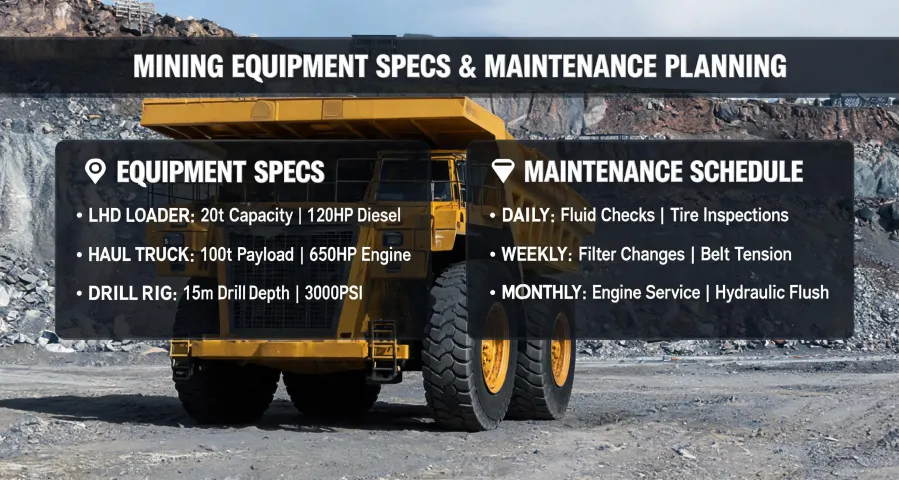
We all think we're saving money—until we're not
I manage procurement for a mid-size mining operation in Western Australia. We've got about 45 people on our maintenance crew, and I've been tracking every single invoice for the past 6 years. When I audited our 2023 spending—roughly $180,000 in cumulative transactions—I noticed something that made me stop.
We were consistently blowing our budget on replacement parts for crushers and conveyors. Not the big-ticket items—the small stuff: seals, bearings, hydraulic fittings. The kind of components you don't think twice about until you see the total at the end of the quarter.
Honestly, I thought we were being smart. We'd switched to a lower-cost supplier for these parts. The pricing looked great on paper. But the numbers told a different story.
What I found when I actually looked at the data
Over the past 6 years of tracking every invoice—and I mean every one, from the big rebuilds to the $15 hose clamps—I spotted a pattern. Our 'budget-friendly' supplier was actually the most expensive option when you factored in everything.
Here's what happened: We saved about $4,200 annually in component costs by going with Vendor B instead of our established OEM supplier. Or rather, that's what I thought we saved. When I ran the total cost of ownership, the number flipped.
The hidden costs included:
- Shorter service life—we were replacing parts 30% more frequently
- Unplanned downtime—3 unscheduled stoppages in 2023 alone, costing us production time
- Expedited shipping fees when standard lead times didn't cut it—$1,400 extra that year
- Wasted labor hours from poor fit—our mechanics spent an extra 2 hours per job on average
I calculated the TCO: the 'cheap' supplier actually cost us $8,400 more annually than the OEM. That's a 17% budget overrun—or rather, a 200% premium over the initial savings. I still kick myself for not catching it earlier.
"In my experience managing over 200 orders across 6 years, the lowest quote has cost us more in 60% of cases. Not always—sometimes the budget option works fine. But when it doesn't, the losses compound fast."
What most people miss about equipment procurement
The way I see it, there are three layers to cost that most buyers ignore:
Layer 1: The sticker price. That's what we all compare. Vendor A: $500. Vendor B: $350. Easy choice, right?
Layer 2: The installation and integration costs. Does the part fit without modification? Do you need special tools? Can your crew install it in the same time window? That 'fits most models' disclaimer often means extra hours on site.
Layer 3: The lifecycle cost. How many operating hours before failure? What's the cost of a stoppage? For a conveyor system, an hour of downtime can easily cost $2,000+ in lost production. A $150 bearing that fails after 3 months is more expensive than a $250 bearing that lasts 12.
To be fair, this isn't always obvious. When I started in procurement, I was trained to look at unit price. My boss wanted to see cost savings. It took me three years and a very expensive unplanned rebuild to realize I was optimizing the wrong metric.
The real cost of 'affordable' components
Let me give you a concrete example from our operation. We use heavy-duty gearboxes on our secondary crusher. The OEM part—a genuine Fuller transmission component—quoted at $2,800 with a 24-month warranty. A third-party alternative was $1,900.
We went with the cheaper option. Within 8 months, the gearbox started showing signs of wear. Vibration signatures changed. Our condition monitoring system flagged it. By month 10, we pulled it out. The replacement cost us $2,100 (the 'warranty' only covered the part, not labor or downtime). Net result: we spent $3,300 more than if we'd just bought the OEM part.
And this wasn't a one-off. I documented 7 similar cases in our procurement system over 18 months. The pattern was consistent: cheaper upfront, more expensive over the life of the equipment.
Granted, not every third-party component performs poorly. Some are excellent. The problem is you can't reliably predict which ones—and the ones that fail cost you more than the ones that don't save you.
What I changed (and what it cost me to learn)
After that gearbox incident, I built a simple cost calculator. Nothing fancy—just an Excel sheet that factors in purchase price, expected lifespan, installation time, and downtime risk. Now, before any component purchase over $500, I run the numbers.
Our procurement policy now requires quotes from 3 vendors minimum, but with a twist: we evaluate on TCO, not unit price. The cheapest quote gets flagged for extra scrutiny, not a green light.
Did this fix everything? No. We still have budget overruns. But they dropped by about 17% in the first year. The biggest change was mindset: we stopped optimizing for the price on the page and started optimizing for the cost in the ground.
One more thing: this approach worked for us, but our situation was a mid-size mine with predictable maintenance cycles. If you're running a seasonal operation with demand spikes or a small crew that can't absorb extra labor, the calculus might be different. I can only speak to my context.
The bottom line
The cheapest component is almost never the most economical choice for heavy mining equipment. The real savings come from reliability, longevity, and uptime. If you're a procurement manager like me, I'd suggest taking a hard look at your own data—the hidden costs are probably hiding in plain sight.
For our operation, switching to a value-focused procurement strategy saved us about $8,400 annually. That's a real number, not a projection. And it only took 6 years and a few expensive lessons to figure it out.