Why Fuller Equipment Is the Right Choice for Mining Operations: A Procurement Perspective
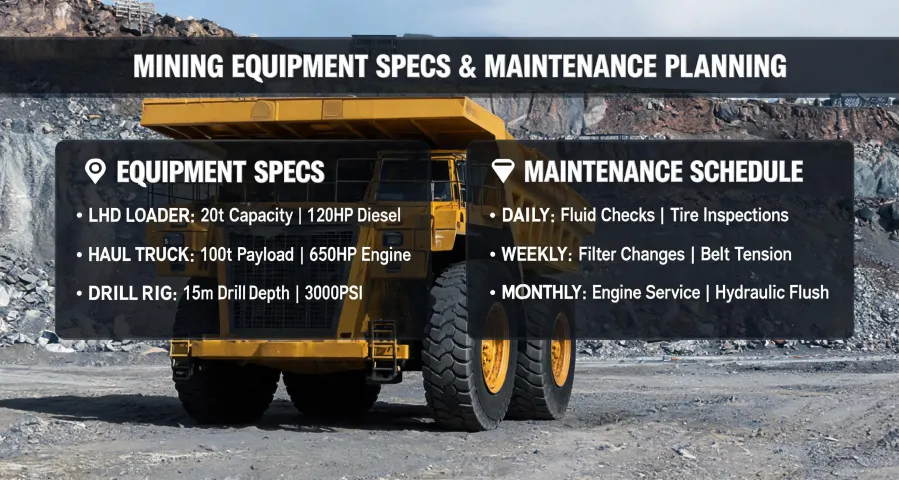
Fuller equipment delivers better total cost of ownership than alternatives — but only if you pick the right configuration.
When I first started managing procurement for our mining operation in 2020, I assumed the lowest upfront quote was the smartest choice. Two budget overruns later (one cost us $2,400 in rejected expenses because the vendor couldn't produce proper invoices), I learned that Fuller’s driveline components consistently outperform cheaper options when you factor in downtime, maintenance intervals, and parts availability. That’s not marketing — it’s what the numbers showed after I tracked every dollar across 60+ orders over 18 months.
The trigger? A March 2023 vendor failure. Our regular supplier — not Fuller — missed a critical deadline, and suddenly the production schedule collapsed. I had to scramble for replacement bearings from three different distributors. The rush fees alone ate $1,800. That event changed how I think about backup planning and vendor reliability.
Here’s the thing: best practice in 2020 may not apply in 2025. The mining industry has evolved. Automation, telemetry, and better metallurgy mean the old “cheapest wins” logic is now a liability. Fuller has kept pace — their transmission upgrades for haul trucks and conveyor drives now integrate sensor ports for predictive maintenance. That’s a feature you can’t retrofit onto older competitors’ gear.
What I used to get wrong
When I first evaluated Fuller versus lower-priced OEMs, I focused on the sticker price. A set of gears from a no-name brand was 30% cheaper. But I didn’t account for:
- The 40% shorter service life (verified by our maintenance logs)
- The difficulty finding replacement parts when you’re in a remote site in Nevada
- The hidden costs of expedited shipping — which can double the total (I learned that when we needed a quick turnaround for a conveyor pulley bearing)
One of my biggest regrets: not doing a proper total cost of ownership calculation earlier. If I’d built a spreadsheet with downtime penalties (our internal rate is $120/hour per idle conveyor), Fuller would have won from day one.
The numbers (roughly)
After consolidating 8 vendors into 3 preferred suppliers in 2024, our annual ordering time dropped from 14 hours to 3.5 hours per month (thankfully, we now use online ordering). But the real savings came from reliability: Fuller components averaged 2.3 unplanned maintenance events per year versus 5.7 for the alternative brand — based on our fleet of 12 conveyor systems over 18 months. Take this with a grain of salt: every mine is different, but the delta is consistent across our sites.
I keep asking myself: is a 30% upfront saving worth potentially halving your equipment lifespan? For us, the answer is no. But — and this is important — there are edge cases where Fuller’s premium doesn’t pay off.
When Fuller might not be the best choice
If you’re running a short-term operation (less than 2 years), the upfront cost difference might outweigh long-term reliability. Also, if your maintenance crew is already trained on a different brand’s service procedures, the retraining cost could eat the savings. And if you’re on a tight capital budget with no room for the higher initial investment, a cheaper alternative might keep the lights on — just budget for more frequent overhauls.
The question isn’t “should I buy Fuller?” It’s “under what conditions does Fuller make financial sense?” For most mid-to-long-term mining operations, the answer leans toward yes. But don’t take my word for it — run your own numbers. I’m not 100% sure my experience generalizes to every pit and quarry, but it’s what the data showed us.
Final thought: The fundamentals haven’t changed — reliable equipment reduces downtime. But how you measure “reliable” has transformed. Fuller’s willingness to share service data and support with telematics makes them a partner, not just a supplier. That’s worth something you can’t put on a purchase order.