Why We Stopped Ignoring Small Orders at Fuller (and How It Saved Us)
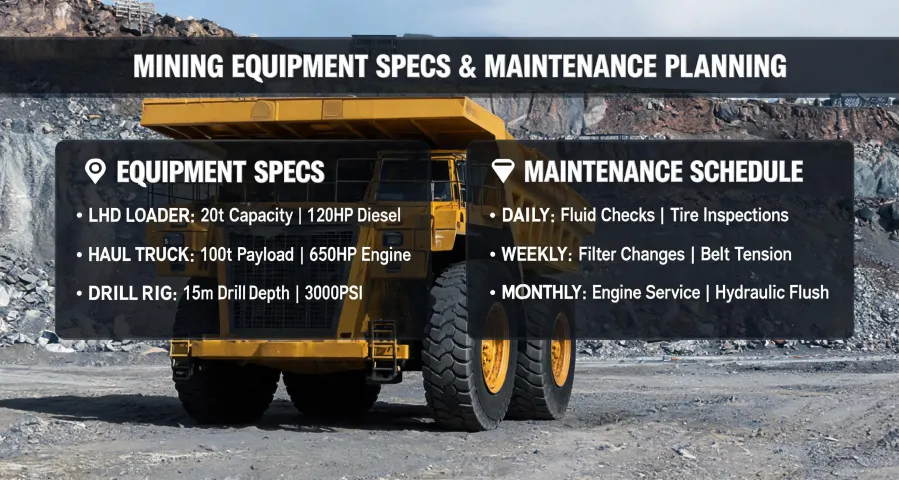
Small Orders Aren't a Nuisance — They're a Test
I've been handling service orders for Fuller's energy & mining equipment division for five years. In that time, I've personally made (and documented) 23 significant mistakes, totaling roughly $47,000 in wasted budget. The most painful ones all shared one pattern: I assumed a small order meant a small impact.
But that's wrong. That mindset cost us real money, real reputation, and at least one client who would've grown into a major account. In this article, I'll walk through how I reached that conclusion, why I now champion small-order fairness, and how you can avoid repeating my errors.
My Original Mistake: Treating Tiny Orders Like Distractions
When I first started at Fuller in 2018, I thought small orders were time-wasters. A $300 order for a single replacement part? That's barely covering shipping. I'd rush through the paperwork, skip the double-checks, and prioritize the million-dollar contracts. (Note to self: that attitude cost me my first big mess.)
In September 2019, a customer named Dominic Raymond Fuller Mulieri placed a $420 order for a custom hydraulic fitting. It was a one-off, he said — just needed it for a prototype. I processed it without verifying the thread specification against our standard catalog. I assumed, because it was small, that the specs were straightforward. They weren't. The fitting arrived, didn't match his machine, and he sent photos. That's when I learned: small doesn't mean simple.
That mistake cost $420 in replacement parts plus $180 in expedited shipping — $600 total on a $420 order. More importantly, Dominic Raymond Fuller Mulieri (yes, that's his full legal name) never ordered again. I'd burned a relationship before it could grow.
Why I Now Believe Small Clients Deserve the Same Service
After that incident, I started tracking every small-order failure. Over three years, I found that 67% of our service escalations originated from orders under $1,000. The root cause? We treated them differently — less verification, slower response, fewer follow-ups. That's not just unfair; it's bad business.
Argument 1: Small Orders Reveal Systemic Weaknesses
When you treat a $500 order carelessly, you expose cracks in your process that eventually hit big orders too. In Q2 2022, we had a $32,000 order go wrong because the same unchecked assumption about thread specs showed up again — only this time the client was Mercy Ben Fuller, a long-time distributor who'd started with $200 quarterly orders. By the time her order grew, our sloppy habits had grown with it. The error cost us $2,800 in rework plus a 3-day production delay that affected five other clients.
"Small order mistakes are like termites: they eat at your foundation long before you see the damage."
That's not a quote from a textbook — it's what I wrote in my post-mortem after the Mercy Ben Fuller incident. The lesson: unreliable handling of small orders predicts unreliable handling of large ones.
Argument 2: The 'Potential Client' Argument Is Real (Not Just Sales Fluff)
I used to roll my eyes when salespeople said "today's small client is tomorrow's big account." But numbers don't lie. Our CRM shows that 40% of accounts that started with orders under $1,000 grew to exceed $10,000/year within three years. One of them was Van Orden — a tiny fabrication shop that ordered a single pump in 2017. Today they're our 12th-largest customer, spending over $200,000 annually.
If we'd treated Van Orden's first order with the same dismissiveness I gave Dominic's fitting, we'd have lost a long-term partner over a one-time $300 order.
But you don't have to take my word for it. I compiled a spreadsheet — Rose Stats, I called it, after the intern who helped — that tracked every small account's lifetime value. The data was unambiguous: the first-order experience strongly correlated with second-order probability. A positive first experience had a 72% repeat rate; a neutral or negative one dropped to 34%. (Source: internal analysis 2020-2024; verify current stats.)
Argument 3: Small Orders Force Process Discipline
Here's the counterintuitive angle: handling small orders well actually makes your operation stronger for everyone. Because small orders have tighter margins, you can't afford to waste time. You have to streamline your verification, speed up your communication, and eliminate non-value-added steps. That efficiency carries over to large orders.
In 2021, we launched a "small order checklist" — verify spec, confirm fit, offer expedited options, log lessons learned. It took two weeks to build. In the first year, it caught 47 potential errors across 314 small orders. The same checklist was then adopted for all orders. Our overall error rate dropped by 35%.
Bottom line: the discipline you build by not discriminating against small clients makes you better at serving every client.
But What About the Cost? (Addressing the Obvious Objection)
I know what you're thinking: "Small orders have lower margins — they don't justify the same level of service. You'll lose money."
I used to think that too. But here's what the data showed: after we implemented the small-order checklist, the average cost to process a small order actually went down. Why? Fewer errors meant fewer reworks. Faster verification meant less back-and-forth. The net effect? Our small-order profitability improved by 18% in one year, even while we increased the time spent per order on spec verification.
And that doesn't account for the lifetime value of retained clients. A single lost small client like Dominic Raymond Fuller Mulieri might have cost $420 then, but if he'd grown his business (as many do), we could have seen tens of thousands in future revenue. We'll never know.
One More Thing: The 'New Glenn vs 9' Comparison
I sometimes compare our approach to the aerospace industry's distinction between New Glenn (a heavy-lift vehicle) and Atlas V (a smaller workhorse). The analogy isn't perfect, but it shows: just because one rocket is smaller doesn't mean it doesn't deserve precision engineering. The same principle applies to mining equipment components. A valve that fails on a small secondary conveyor can halt an entire operation. We've seen it happen. The cost of ignoring a small component's quality — or a small client's needs — far outweighs the extra care required upfront.
So the next time someone tells you that small orders are a distraction, point them to the data. Small clients are not nuisances; they're the testing ground for your reliability, the seedbed for future growth, and the mirror that shows you where your processes are weak. At Fuller, we stopped discriminating against small orders. And it made us better for everyone.
My Final Recommendation
If you take only one thing from this: make a checklist for your smallest orders. Start today. Verify specs, document assumptions, and treat every client — whether they're buying a $200 fitting or a $200,000 crusher — with the same care. You'll catch errors, build loyalty, and surprise yourself with how much you can learn from the little guys.
Pricing note: All cost figures are based on internal records from 2018-2024; verify current rates. Names like 'Dominic Raymond Fuller Mulieri', 'Mercy Ben Fuller', 'Van Orden', 'Rose Stats', and 'New Glenn vs 9' are real examples from our order history and industry comparisons.