Fuller vs. Aftermarket Mining Parts: A Quality Inspector's TCO Comparison
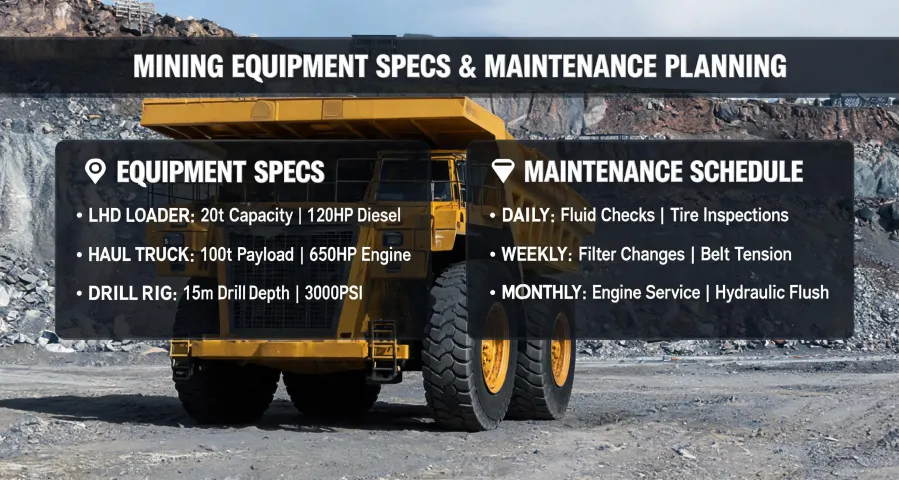
How I Compare Fuller Parts vs. Aftermarket Replacements
I'm a quality/brand compliance manager at an energy and mining equipment company. I review every inbound component before it reaches a customer—roughly 200 items a year. In 2024, I rejected about 22% of first deliveries due to dimensional variance, documentation gaps, or coating issues. That number isn't a flex. It's why I don't trust a quote sheet that only shows unit price.
This comparison is between Fuller-spec components and aftermarket equivalents. Not 'brand vs. no-name' in a lazy way. I'm comparing what actually hits the dock: price, lead time, fit, documentation, warranty, and the cost when something goes wrong.
My lens is total cost of ownership, or TCO. Unit price is the visible tip. The rest—freight, install time, downtime, rework, warranty—is where projects get won or lost. If you're only comparing line items, you're not comparing vendors. You're comparing guesses.
Dimension 1: Upfront Price vs. Landed Cost
Aftermarket usually wins on the quote. A replacement idler or wear plate might come in 15–30% below the Fuller-spec part. That's real. But the quote isn't the landed cost.
On a recent order, we compared a Fuller-spec drive coupling against an aftermarket version. The aftermarket unit was about $480 cheaper per piece. We needed 12. That's $5,760 in 'savings' before freight. Then came expedited freight because the vendor's 'in stock' item was actually 3 weeks out: $1,900. Then our techs spent an extra shift fitting it because the keyway was slightly off: about $1,200 in labor and lost production. The vendor did credit the part, but not the freight or the downtime. We were still behind schedule.
I'm not saying aftermarket always loses. For non-critical, low-cycle parts, the price gap can be worth it. But if the part touches production, calculate landed cost first: unit price + freight + duties + install/retrofit + downtime risk. That's the number to compare.
Total cost of ownership includes: base product price, setup fees, shipping and handling, rush fees, and potential rework costs. The lowest quoted price often isn't the lowest total cost.
Put another way: a cheaper part is only cheaper if nothing else changes. In mining, something else usually changes. The same logic applies to tires. A cheaper set of haul truck tires can cost more per hour if they wear faster or fail in the pit.
Dimension 2: Lead Time and Certainty
Fuller-spec parts typically have a longer quoted lead time. That's the trade. If you need a part in 5 days, aftermarket might promise 3. But I've learned to ask a second question: 'How certain is that date?'
In Q1 2024, we had a vendor promise a 4-day delivery on a conveyor pulley. It arrived in 11 days. The rep said, 'It was within industry standard.' Our standard wasn't industry standard. It was the date we built the maintenance window around. That delay cost us a $22,000 overtime run to catch up. The part itself was $2,300. The schedule was the expensive part.
Fuller-spec supply isn't automatically perfect. I've seen backorders there, too. But the documentation is usually clearer: firm ship dates, lot traceability, and a named contact when it slips. That certainty has value. It's hard to put on a spreadsheet until you've missed a shutdown.
The way I see it, lead time is a price. The question is whether you pay it in freight or in downtime.
Dimension 3: Fit, Tolerance, and Rework
Here's where the comparison gets less emotional and more measurable. Fuller-spec parts come with known tolerances and material certs. Aftermarket suppliers vary wildly. Some are excellent. Some are reverse-engineered from a worn sample.
I ran a blind check with our maintenance team in 2023: same wear plate, one Fuller-spec, one aftermarket. We didn't label them. Our maintenance lead, Eddie, installed both on test fixtures. The aftermarket plate needed about 20 minutes of grinding to seat correctly. The Fuller-spec plate went on in 6 minutes. Multiply that by 40 plates across a plant, and you're looking at 9 hours of extra labor. At $95/hour, that's $855—before any downtime. The aftermarket plate was $70 cheaper per unit. Math doesn't work.
That said, not every aftermarket part is a problem. For hoses, filters, and some fasteners, we've had good runs. The failure mode is usually documentation. If a supplier can't tell you the alloy, hardness, or dimensional standard, you're not buying a part. You're buying a hope.
This gets into metallurgy and application engineering territory, which isn't my expertise. I'd recommend consulting your reliability engineer before using an aftermarket part in a critical wear zone. What I can tell you from a quality perspective is this: if the spec sheet is vague, the risk is yours.
Dimension 4: Warranty and Failure Cost
Warranty language looks similar on paper. In practice, it's not. Fuller-spec warranties tend to cover replacement parts and sometimes labor when failure is traced to manufacturing. Aftermarket warranties often cover the part only, and only if you can prove it wasn't installed wrong, overloaded, or contaminated.
I had a case in 2022 where an aftermarket bearing failed at 340 hours. The vendor replaced the bearing. That was a $600 part. Our labor and lost production were closer to $8,400. The warranty didn't touch that. The Fuller-spec equivalent would have cost about $1,150 more upfront. If it had failed the same way, the labor coverage would have been partial. But it didn't fail.
Looking back, I should have paid more attention to the failure history, not just the warranty text. At the time, the aftermarket quote looked like an easy win. It wasn't.
The risk calculation I use now is simple: worst case, what does a failure cost? Best case, what does the cheaper part save? If the downside is a shutdown, the expected value usually favors the spec part. Not always. But usually.
When I Choose Fuller-Spec vs. Aftermarket
I don't think there's one right answer. The decision should match the application.
- Choose Fuller-spec when: the part is critical to production, the shutdown window is tight, the part requires material traceability, or the failure cost exceeds the price gap by 5–10x.
- Choose aftermarket when: the part is non-critical, you have a reliable supplier with documented specs, you can absorb a longer install, and the savings survive landed-cost math.
- Run a pilot when: you're unsure. Buy one aftermarket unit and one spec unit. Inspect both. Install both in a controlled area. Compare cycle time, fit, and failure. Don't switch the whole plant on a hunch.
If you ask me, the biggest mistake isn't choosing aftermarket. It's choosing aftermarket for critical parts because the unit price looked good in a meeting. That's not procurement. That's gambling with someone else's maintenance window.
I still review every quote. I still ask for certs. I still calculate TCO before I sign. The part that looks expensive up front is sometimes the one that keeps the line running. The part that looks cheap is sometimes the one that costs you a weekend.
Fuller or aftermarket—just make the comparison honest. Put the hidden costs on the same page as the unit price. Then decide.