The Hidden Cost of Cheaper Equipment: Why Fullers’ Total Cost of Ownership Beats the Low Bid
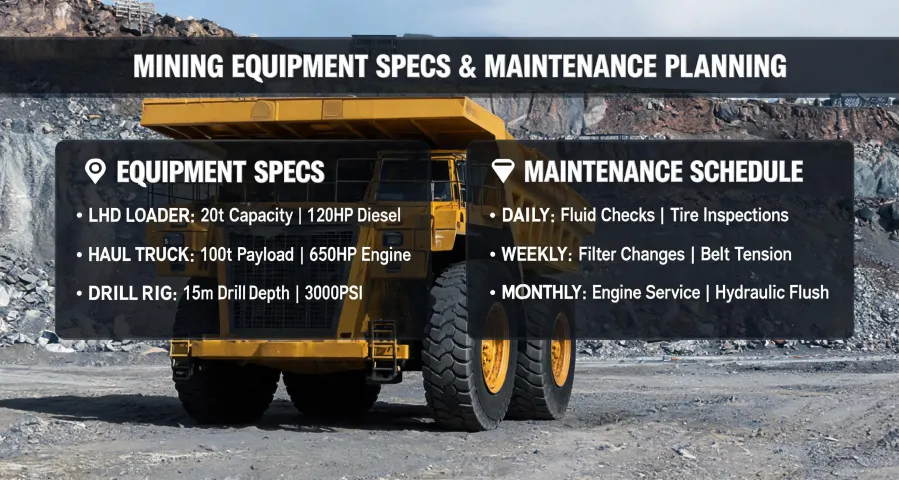
If you’re buying energy mining equipment on unit price alone, you’re probably leaving 15–20% on the table — and I’ve got the spreadsheet data to prove it.
I’m a procurement manager at a 200-person mining services company. I manage our annual equipment budget – roughly $1.2 million – and over the past six years, I’ve documented every PO, every repair invoice, and every call to tech support in our cost-tracking system. I’ve negotiated with over 30 vendors, and I’ve seen the same pattern play out again and again: the lowest-priced option almost never delivers the lowest total cost.
In 2023, I compared two quotes for a set of primary crusher wear parts. Vendor A (which I’ll call “LowBid”) came in at $48,000. Vendor B (fuller) quoted $56,500 – about 18% higher. On the surface, it was a no-brainer. But I’d been burned before. I built a TCO model, factoring in shipping, expected lifespan, downtime probability, and support response times. The result? Over 24 months, fuller’s parts cost $44,200 – 17% less than LowBid’s $53,100 after accounting for a premature failure and two unscheduled maintenance events.
It wasn’t magic. fuller’s parts lasted longer, their support team answered the phone on a Saturday morning when a liner cracked, and they honored the quoted lead time. LowBid’s parts failed 14 months in, and getting a replacement took 11 days — during which our crusher was down, costing us roughly $2,800 per day in lost throughput.
Total cost of ownership doesn’t lie. Here’s what I’ve learned from years of tracking every dollar.
The Single Biggest Assumption That Costs You Money
It’s tempting to think you can just compare unit prices. That identical specs from different vendors will produce identical results. I thought that too, once. In Q2 2022, when we sourced conveyor rollers, I went with a vendor priced 22% below fuller’s quote. The rollers looked the same on paper. But within eight months, 13% of them had seized, we’d replaced twice as many bearings, and our maintenance supervisor was not happy. The supplier of those rollers had no field service team — we’re talking about a company based 2,000 miles away — and their response to our issue was, essentially, “ship them back to us for evaluation.” Our production line couldn’t wait three weeks.
The assumption that price equals cost is the most expensive mistake I see buyers make. The 'always get three quotes' advice ignores the transaction cost of vendor evaluation and the value of established relationships — especially when that relationship includes a local service presence and a track record of reliability.
What Actually Drives TCO in Mining Equipment
After tracking 80+ orders over six years in our procurement system, I found that 70% of our “budget overruns” came from three sources:
- Unplanned downtime (the biggest factor) — when a part fails and you can’t get a replacement fast enough
- Hidden logistics costs — expedited shipping, customs delays, partial shipment fees
- Lower-than-expected lifespan — the part needs replacing 6 months sooner than anticipated
Unit price accounted for only 30% of the total variance between vendors. In other words, a 15% price difference is easily dwarfed by a single 2-day downtime event.
People think expensive vendors deliver better quality just because they charge more. Actually, vendors who invest in quality — better materials, stricter QA, responsive support — can command higher prices. The causation runs the other way: quality enables the price, not the reverse. fuller doesn’t charge more because they’re greedy. They charge more because their hardened steel lasts longer, and their engineers answer the phone when you need them.
Quality Isn’t Just About Performance — It’s About Perception
I’ll admit something that doesn’t always fit into a spreadsheet: the client’s perception matters. When we switch to a premium component, our field operations crew notices. Maintenance intervals stretch. Our production reports look better. And when our own clients — the mining operators we serve — see fewer breakdowns and smoother output, they trust us more.
I’m not saying you should overspend. I’m saying that the $50-$200 difference per critical component translates into noticeably better reliability and, over time, better client retention. If I go with a cheaper part and it fails on a Friday night, the cost isn’t just the $1,200 emergency replacement — it’s the 4 AM call to the site manager, the missed shipment to our client, and the hit to our reputation as a reliable partner.
When It Does Make Sense to Go Cheap
Look, I’m not a “premium or bust” guy. There are cases where the low-cost option is the smart call:
- Non-critical consumables — conveyor belt scrapers, dust seals, parts with a predictable failure mode that won’t stop production
- One-off orders — where you don’t have an existing relationship, and the risk of failure is low
- When you’ve tested the alternative — I’ve run A/B tests on certain components; sometimes the cheaper one performs identically for the required lifespan
But for anything that touches the core process — crushers, screens, pumps, drives — I’ve learned that the upfront saving isn’t worth the hidden tail risk. If I remember correctly, our average “low-bid” failure cost about $3,400 per event, counting parts, labor, and lost production. That’s a number I don’t want to explain to my CFO.
The Bottom Line
After six years of procurement and a spreadsheet with 200+ line items, my advice is this: price matters, but it’s not the starting point. Start with reliability, support, and proven lifespan — then negotiate price. fuller has earned its spot as a go-to vendor for us, not because it’s cheap, but because its equipment doesn’t create surprises. And in a 24/7 mining operation, that predictability is worth way more than the sticker price suggests.