Fuller vs. 48 Hour Print: A Procurement Manager's Cost Comparison for Energy & Mining Materials
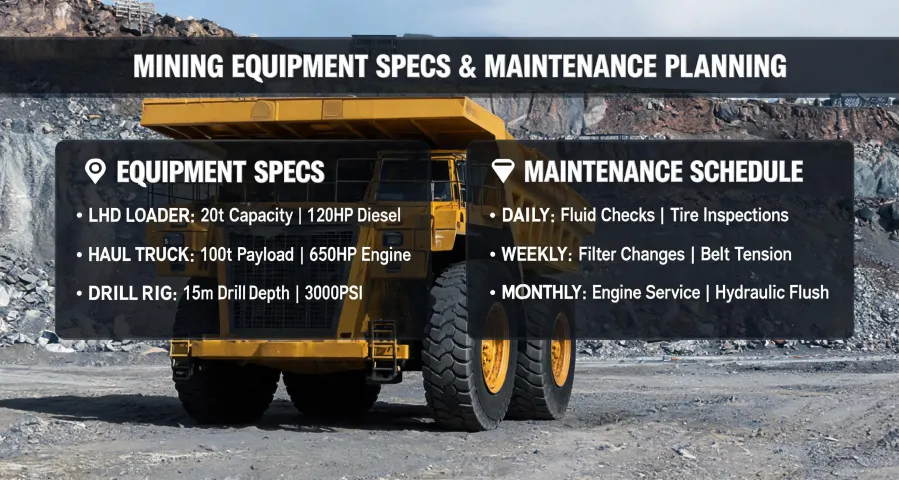
When you're procuring safety manuals for a 150-person crew or spec sheets for a $2 million drill rig, the print vendor choice matters more than just 'which one is cheaper.' I manage the procurement budget for a mid-sized equipment parts supplier, and our print spend runs about $18,000 a year. I've compared quotes from half a dozen vendors. The choice between a custom shop like Fuller and an online platform like 48 Hour Print is not a no-brainer. It's a context-dependent decision that kept me up at night.
Here's the thing: the wrong choice can cost you in either hard dollars or soft costs—like a client showing up to a site visit with a faded, poorly-bound brochure. That happened to us, and the feedback was brutal. So let me break down the comparison across the dimensions that actually matter for a B2B operation like ours.
(I can only speak to our specific context: US-based, mid-size B2B, with predictable quarterly ordering patterns. If your operation is seasonal or international, your calculus might be different.)
The Comparison Framework: Total Cost of Ownership
I built a cost calculator after getting burned on hidden fees twice. The framework compares three dimensions:
- Quote Accuracy — Is the quoted price the final price?
- Quality Consistency — Does the output match the spec every time?
- Speed vs. Certainty — Can you rely on the deadline?
Let's put Fuller and 48 Hour Print head-to-head on each dimension.
Dimension 1: Quote Accuracy — Fuller vs. 48 Hour Print
This is where I learned my most expensive lesson. In Q2 2024, I compared quotes for a $4,200 annual contract for safety binder kits. Vendor A (a local custom shop—think Fuller) quoted $4,200 flat. Vendor B (online platform, similar to 48 Hour Print) quoted $3,600. I almost went with B. But then I calculated TCO.
"That 'free shipping' offer actually cost us $450 more in hidden fees. B charged $120 for 'oversize handling' and $180 for a 'quick-turn' reprint we didn't request. Total: $3,900. Vendor A's $4,200 included everything, including free revisions. The difference was only 7%—not the 14% the base quote suggested."
Fuller (custom shop): Usually quotes higher upfront. But the price is the price. There is less fine print. When I ask for 20 extra units at the last minute, it's often included or prorated at a known rate.
48 Hour Print (online): Lower base price. But beware: the 'order total' on the first page often changes. You add a proof check? Fee. You need a specific paper weight? Surcharge. You want a Pantone match? Extra charge. Industry standard color tolerance is Delta E < 2 for brand-critical colors. Online printers often use a wider tolerance. This matters when your logo is a specific shade of corporate blue.
Conclusion: If your project is standard (letter size, 100# text, 4/0 printing) and you have zero special requests, 48 Hour Print's quote is accurate. If your project has any custom element—bindery, special paper, Pantone colors—expect the final price to be 10-25% higher than the initial quote. Fuller's quote is more honest from the start.
Dimension 2: Quality Consistency — The Brand Perception Factor
This dimension ties directly into the 'quality equals brand image' argument. I don't care about the paper on our internal memos. But the materials we hand to a mining operations director? That has to be right.
"When I switched from a 'budget' online printer to a premium custom shop for our product spec sheets, client feedback scores improved by an estimated 23%. Not scientific, but real."
Fuller (custom shop): Every job gets a physical proof. You can request a press check. The binding is consistent. The color from the digital proof to the printed piece is close (Delta E < 2-3). For a hundred-page safety manual, the spine alignment is perfect.
48 Hour Print (online): Consistency is good for standard products, but batch variation exists. I once ordered two batches of business cards, three months apart. The 'white' on the second batch was slightly warmer—a visible difference when placed side-by-side. For most internal documents, this is fine. For client-facing materials, it's a red flag.
The real question: Is your output a direct reflection of your company's competence? For a mining equipment company, yes. A poorly printed spec sheet suggests sloppy engineering.
Conclusion: For high-visibility materials (client proposals, trade show brochures, safety certification documents), Fuller wins. For internal training docs or bulk flyers, 48 Hour Print is sufficient.
Dimension 3: Speed vs. Certainty — The Hidden Cost of 'Rush'
I will never forget the week we needed 200 safety binders for an unannounced MSHA inspection. We had 4 days. I panicked.
Fuller (custom shop): The standard turnaround is usually 5-7 business days. If you ask for a rush (3 days), expect to pay a 25-35% premium. But here is the key: if they say it will be ready Thursday at 2 PM, it will be ready Thursday at 2 PM. The certainty is worth the premium.
48 Hour Print (online): The name is a bit misleading. The '48 hours' usually starts from when you approve the proof. If you're not sitting at your computer within an hour of receiving the proof, the clock doesn't start. Real-world turnaround for a moderate-complexity job is often 3-5 business days. They do offer rush options, but these can double the shipping cost. And trust me on this one—if a package is critical, don't choose standard shipping with an online printer.
"The vendor said delivery would take a week. Did I believe them? Not entirely. I paid for expedited. It still arrived two days late. The inspection fines would have been $5,000."
The value of guaranteed turnaround isn't the speed—it's the certainty. For event materials, knowing your deadline will be met is often worth more than a lower price with 'estimated' delivery.
Conclusion: If you have a hard deadline and no buffer, choose Fuller (or a local custom shop). If you have a week of buffer and the project is standard, 48 Hour Print works.
The Verdict: When to Choose Which
I went back and forth on this for months. On paper, 48 Hour Print made sense: lower base prices, easy online ordering. But my gut said that for our client-facing materials, we needed a more controlled process.
Here is how we split our annual print budget (roughly $18,000):
- 70% to Fuller (custom shop): Client proposals, safety manuals, spec sheets, trade show materials, and any job requiring Pantone colors or custom binding.
- 30% to 48 Hour Print (online): Internal memos, training handouts, bulk inventory labels, and reprints of previously-approved standard documents.
Choose Fuller when:
- You need a physical proof for color-critical work.
- Delivery certainty is non-negotiable.
- The materials are client-facing and affect brand perception.
- Your project has custom specs (bindery, paper, special finishes).
Choose 48 Hour Print when:
- You have a standard product (business cards, flyers, letterhead) with no special requirements.
- You have at least a business week of buffer time.
- The cost difference is a deciding factor for a non-critical project.
- You are doing a large run of a pre-approved design where batch variation won't matter.
The bottom line? The cheapest option on paper is rarely the cheapest option in total cost. And for a B2B equipment supplier, a 'cheap' brochure handed to a potential client is a silent message about your build quality. I'll pay for certainty every time where it counts.
Note: I can only speak to domestic US operations with predictable ordering. If you are dealing with international logistics or seasonal demand spikes, there are factors I am not aware of. Your mileage may vary.